
By Winnwood Flooring · Updated August 11, 2026
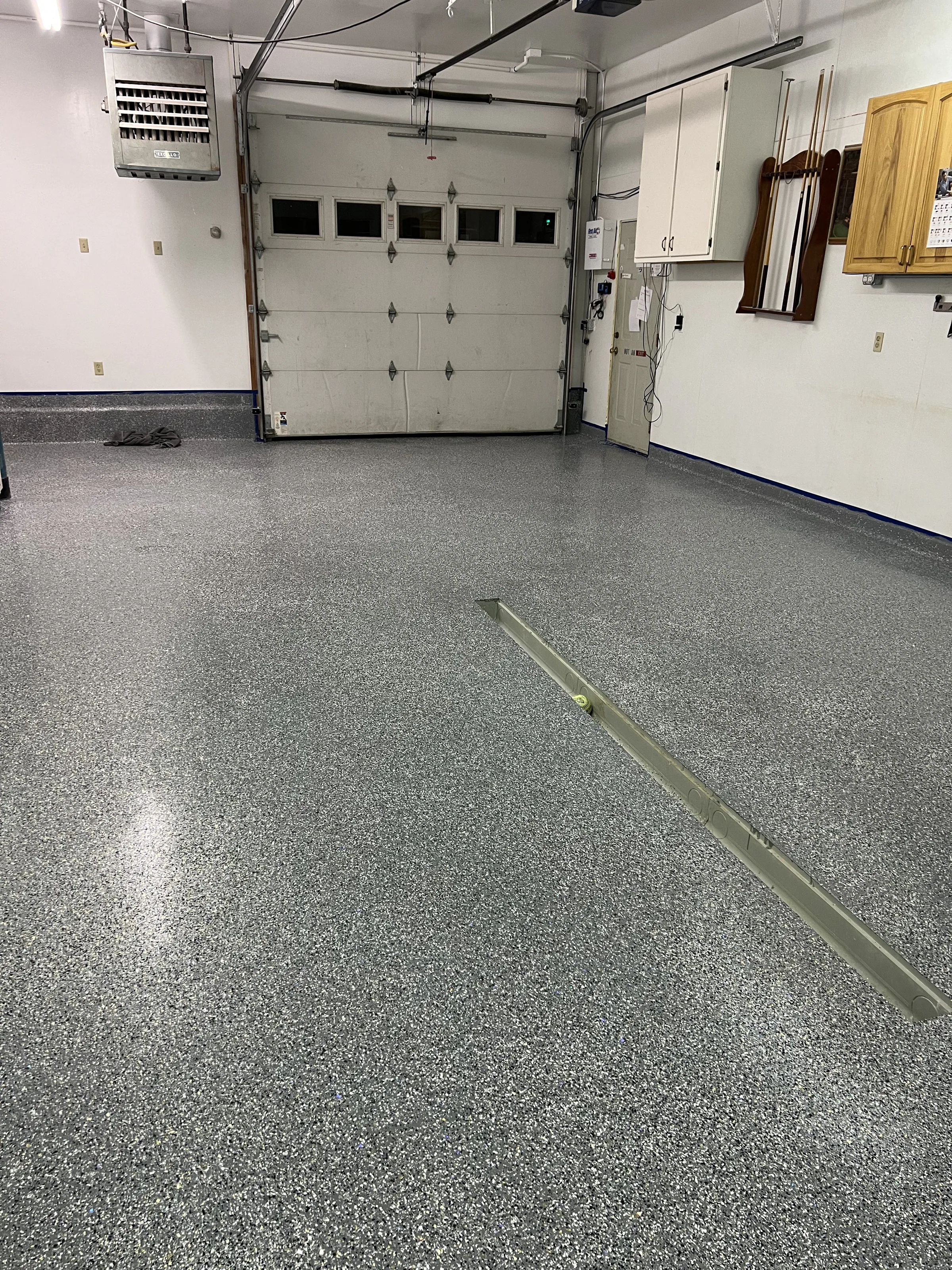
Coated concrete is the right answer for a lot of working spaces around Missoula — shops, warehouses, workspaces, anywhere with vehicles, rolling equipment or chemical exposure. It is durable, it is easy to clean, and it is seamless.
It is also the flooring most often done badly, and almost always for the same reason.
Preparation is the entire job
A coating bonds to concrete mechanically. That bond is what everything else depends on, and it is only as good as the surface it is bonding to.
Concrete straight off the pour has a smooth, closed surface that coatings do not grip well. It has to be mechanically profiled — ground or shot-blasted — to open the surface up. Applying a coating over unprepared concrete produces a floor that looks superb for a season and then peels in sheets where the traffic is heaviest.
When a coating fails early, this is why, essentially every time. It is also the step most easily skipped to win a job on price, because nobody can see it once the floor is down.
Moisture in the slab
Concrete passes moisture vapour upward, and a coating is a barrier. Vapour that cannot escape builds pressure under the coating and pushes it off the slab.
That means testing before coating, not assuming. Slabs on grade without a vapour barrier beneath them, and any slab below grade, need the reading taken seriously. Where moisture is present there are systems designed to tolerate it, but choosing one requires knowing the number first.
What commercial asks that a home garage does not
That last one is worth deciding deliberately. Broadcast aggregate adds grip and is essential in a wet or oily working environment; it also makes the floor slightly harder to sweep. It is a trade-off to make on purpose rather than by default.
- Rolling loads — forklifts and equipment concentrate weight far beyond a car tyre.
- Chemical exposure — solvents, oils and cleaning agents that a domestic garage never sees.
- Thermal shock — hot tyres, and vehicles coming in cold in a Montana winter.
- Downtime cost — every day the space is unusable is money.
- Slip resistance — a working floor that gets wet needs texture built into the coating.
Cure schedules and getting back to work
Coatings have separate timelines for foot traffic, for vehicle traffic and for full chemical resistance, and they are genuinely different dates. Driving on a floor that has taken foot traffic but not fully cured is a common way to mark a new coating permanently.
Cold slows curing, which matters here. A shop floor coated in February behaves differently from one coated in July, and the schedule has to account for the slab temperature rather than the air temperature.
We plan the sequence around your downtime rather than ours, including phasing a large floor in sections where a business cannot close.
Getting a realistic quote
Ask any contractor how they are preparing the slab and what the moisture reading was. Those two answers separate quotes far more than the coating product does.
We assess the slab before pricing, because quoting a coating without knowing what is under it is guessing. Our [epoxy and garage floor coatings](/services/epoxy-coatings) page covers the range, and the garage-specific version is in our [garage floor coatings guide](/blog/epoxy-garage-floor-coatings-missoula).
Related services
- Epoxy and Garage Floor Coatings - Polyaspartic and epoxy coatings built for Montana winters.